Showing posts with label behavior. Show all posts

Saturday, February 27, 2010

Journal Club: Neuroprotection by NGI1 Gene in a Parkinson's Disease Model

One of the most popular mechanisms of pathology in Parkinson's disease (PD) research is cell death through Complex I inhibition in the mitochondria.

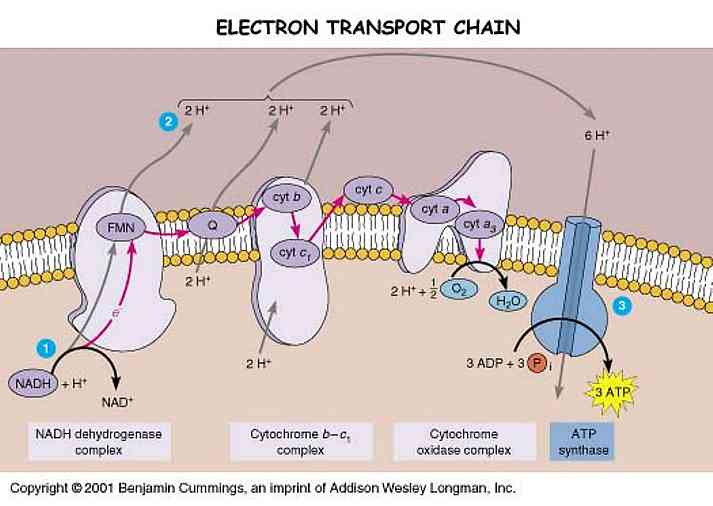
Mitochondria -- affectionately known as the power houses of all cells -- are where energy is produced.  There is a series of protein complexes forming the Electron Transport Chain (ETC) which, as their acronym exposes, steal electrons from contributing molecules and convert them into energy and water.

The fully reduced H2O form of oxygen is non-toxic.  The various single-electron intermediates between O2 and H2O are ALL toxic free radicals, the so-called Reactive Oxygen Species (ROS).  Complex IV (cytochrome oxidase complex) has a gate that transfers electrons directly to O2, reducing it to water without generating ROS.  Complexes I and III, however, occasionally allow electrons to escape from the ETC to form ROS.

In Parkinson's disease, Complex I is dysfunctional, and it is thought that much higher concentrations of ROS are produced in the ETC.  These attack multiple systems in the mitochondria which eventually lead to the breakdown of cellular DNA, and the cell itself.

Many cases of PD are characterized post mortem by a selective loss of dopamine cells via this mechanism.

The study by Marella et al has used the variant of Complex 1 found in yeast to attempt to quell this rampant ROS formation.  Using the rotenone rat model, the group injected the Ndi1 gene via biodegradable microspheres (classy...), and monitored recovery in the substantia nigra pars compacta (SNpc; the primary region of dopamine cell loss) and in behavior.

After 60 days, tissue analysis of Ndi1-injected rotenone rats showed increased staining for viable dopamine cells in the SNpc.  Those lesioned rats who did not receive the Ndi1 gene showed significantly fewer stained dopamine cells, and extensive staining with antibody against 8-oxo-dG (indicating oxidative damage to DNA).

My gripe with the study -- in addition to its not being tremendously written -- is that it is lacking in relevant behavioral assessment.  The study monitored speed of movement, and the number of rotations in a widely used apomorphine test.  The rotations test is normally used in unilaterally lesioned animals (which these were) to indicate preference to rotate in one direction.  However, the direction of rotation induced by apomorphine in this study was determined by more factors than the unilateral lesion, which caused the animals to rotate in both directions.  Therefore, behavioral data was reported as the "number of animals exhibiting 100% lateralized rotation irrespective of the direction."  In my opinion, the behavioral test was severely weakened by this caveat and the group should have employed a quick additional test... like the Whisker test or lateralized grip strength.

This suggests that the Ndi1 gene -- the yeast version of Complex 1 -- was able to compensate for inhibition of Complex 1 by rotenone, decrease ROS activity by serving as an electron transporter, and lessen cell death.  If this could be replicated in higher animals, it may prove a viable candidate for clinical trials. 

Aside from deficits in writing and behavioral analysis, the story told by this article was fascinating with  very intriguing implications.   They did their homework, publishing several studies on in vitro activity of the Ndi1 gene and subsequent protein (1, 2) as well as confirming benign effects of introducing a yeast gene in vivo (1, 2)  .


ResearchBlogging.org
Marella M, Seo BB, Nakamaru-Ogiso E, Greenamyre JT, Matsuno-Yagi A, & Yagi T (2008). Protection by the NDI1 gene against neurodegeneration in a rotenone rat model of Parkinson's disease. PloS one, 3 (1) PMID: 18197244

Sunday, January 24, 2010

Journal Club: RBD and Parkinson's Disease

There is a great deal of research being done regarding the mechanisms of Parkinson's disease (PD) and possible targets for therapeutic cures.  Yet, it is one of many conditions that remains incredibly hard to diagnose.  PD patients are not typically diagnosed until the disease has progressed to 70-90% dopamine cell depletion when symptoms become observable in movement behaviors (Jankovic 2008).

By the time cell loss has progressed this far, it is very difficult to achieve a successful long-term treatment plan.  Pharmaceuticals such as L-Dopa (Jubalt et al 2009) and rasagiline (Olanow et al 2009) are generally effective, but can lose their effect or cause dangerous side effects over time.  Deep brain stimulation has been shown to be very effective behaviorally, but there it is an intense procedure which has occasionally been correlated with subsequent cognitive impairments (York et al 2008).  Exercise therapies have also shown promise in recovery therapy, but have seemed more lasting in the peripheral nervous system than the dopamine system of the CNS (Goodwin et al 2009; Petzinger et al 2007; Muhlack et al 2007).

When it is so important to try to identify markers of PD before it progresses beyond our current ability to treat it in a lasting way, Dr. Ronald Postuma and colleagues out of Montreal, Quebec, Canada have identified REM sleep behavior disorder (RBD) as a possible indication of developing PD.  RBD is the loss of muscle atonia that normally occurs during REM sleep, causing a person to thrash unconsciously.

Their study is a beautiful longitudinal representation of several patients diagnosed with RBD in the 1980s who developed either PD or dementia by 2004.  Of their 17 final RBD patients, 6 (5m/1f) had developed PD and 11 (10m/1f) developed dementia.

The Postuma group suggests that there might be a discrete pathological condition specific to "RBD-then-neurodegeneration"which has different early manifestations than PD alone.  A very interesting concept as RBD, dementia and PD are all distinctive in their Lewy body and ß-amyloid
deposition.  If further study of the evolution of RBD into PD shows a strong correlation, this could be a giant leap forward in terms of PD diagnosis and early treatment.  There may indeed be a distinct pathology to this progression or there may not be.  In any case, this is a very important study in the field of neurodegenerative disorders, and I believe it is expecially important to get longitudinal studies like this one funded.

The staging model of PD developmnt proposed by Braak et al in 2003 proposes that the effects of PD begin in the olfactory area of the brain, spreading to autonomic and sleep-involved regions, and finally to dopamine loss in the nigrostriatal pathway and several downstream cortical pathways (Braak et al 2003).  The Braak model, in conjunction with this new proposal from Postuma et al, leaves me wondering about Restless Leg Syndrome (RLS) as another possible indicator of PD.

The connection between RLS and PD is in dopaminergic transmission, as suggested by Dr. David Rye in 2004.  A study by Tan et al in 2002 found that prevalence of RLS in PD patients was not significantly different from incidence in their healthy population, roughly 15%.  The Tan study was not looking at progression of RLS into PD, however, so it is possible, as suggested in the Postuma study, that RLS-PD may have its own unique pathology. 

To date, I have not found any longitudinal studies of RLS progressing into RBD or PD.

Wednesday, December 2, 2009

in vitro meat and the de-evolution of homo sapiens

Homo sapiens is Latin for wise or knowing man.  I would like to strike "sapiens" from our evolutionary title and replace it with "homo follis", which is Latin for windbag or foolish man.  Can I do that?

Normally, I love technology and am all for its advancement as long as there is an antidote should it prove to be physically or ethically harmful.  There is a line, however, over which technological advancement frequently crosses into the world of promulgating sheer gluttonous sloth.  The antedote in the case of modern animal farming is to change human behavior.  If we consume less meat, farmers aren't pressured to over-produce massive qunatities in order to stay economically competitive.  Less pressure to over-produce means less incentive to abuse farmed animals with antibiotics, hormones, extremely unhealthy food and other revolting living conditions.

But is the American populous ready to make that sacrifice for the sake of being humane?  You bet your ass we're not.  Instead, commercial science has discovered a much more attractive antidote to modern animal farming -- one that requires significantly less effort on the part of the consumer than reducing meat consumption.  For the last decade or so, scientists have been learning how to culture "meat" in a petri dish (Datar & Betti 2009Edelman et al 2005).  We (the people) are so lazy and so addicted to meat that scientists and economists have fleshed out an analysis of the viability of in vitro meat culturing as a "replacement" for meat farming (In Vitro Meat Consortium 2008).

Is it less of a personal burden to adjust to the taste of stem cell meat than to eat less meat and/or eat more local/grassfed/humanely farmed meat?  The In Vitro Meat Consortium seems to think so, as does PETA:
"As far as we’re concerned, if meat is no longer a piece of a dead animal there’s no ethical objection." 
Really?  Because I'm pretty sure that teaching humanity survival through relying on technology to save us from having to make proactive changes in our behavior has negative ethical implications.  For instance, the backward evolution of our species. 
"Lab-grown meat isn't an easy sell, but there could be benefits. Designer meat would theoretically be free of hormones, antibiotics, and the threat of mad cow disease or bird flu. Omega-3 fatty acids and vitamins could be blasted into the mixture ", says Ian Christe in his article in Popular Mechanics on the subject.
Yes, Ian, you are absolutely correct.  However, HUMANELY FARMED ANIMALS WOULD ALSO BE THEORETICALLY FREE OF HORMONES, ANTIBIOTICS AND THE THREAT OF MAD COW DISEASE OR BIRD FLU.  Additionally, OMEGA-3 FATTY ACIDS AND VITAMINS ARE PRESENT IN FREE-ROAMING UNGULATES WHO ARE NOT PUMPED FULL OF GRAIN-BASED SLOP TO FATTEN THEM UP ALL YEAR ROUND.  And further, WHAT ABOUT ALL THE OTHER SUBSTANCES THAT ARE USED IN THE CULTURING OF THE MEAT; MUST WE ASSUME (like idiots) THEY WILL BE TOTALLY HARMLESS?

So, I must pose the final question: will humanity prefer the financial burden of commercial in vitro meat production, or the burden of changing their consumptive behavior in order to promote humane animal farming?  Unfortunately, I fear the former may win out. 

Lastly, a warm thank you to PETA for supporting the de-evolution of humanity (not that I'm surprised), as well as an alternative to industrially farmed meat that wont actually stop anyone who wants to taste real meat from doing so (tofu dogs have already made this attempt).

Wednesday, November 11, 2009

autism spectrum disorders, part deux

Another instance where the question begs to be asked: are handwriting patterns differentiated between autistic and Asperger children?

This study found quality of letter formation in the handwriting of children with ASD to be lower than in normally developing children.  The subject hasn't really been addressed since 2001, when Beversdorf et al identified the significant instance of macrographia in patients with ASD, as compared to age- and IQ-matched control subjects.  Both studies have subsumed autism and Asperger into the ASD umbrella -- just as likely for the purposes of procuring a larger test subject sample as for making their results widely applicable:
"Whereas all subjects with autism spectrum disorder met the diagnostic criteria for autism through their reported behavior during childhood, most subjects had demonstrated significant improvement in function over time, such that the distinction between the various forms of autism spectrum disorder was not as clear. Therefore the more general term autism spectrum disorder is used to describe these patients." (Beversdorf)
The original description of Asperger syndrome in 1944 noted difficulties in motor coordination, specifically in handwriting (Frith; translated 1991).  One year before, Leo Kanner published his first paper asserting that some autistic children were quite agile, performing "hair-raising feats of balancing," while others were clumsy "despite dextrous manipulation of objects" (Frith pg. 95). 

I would love to see a study comparing the different aspects of handwriting using both the Revised Physical and Neurological Examination for Subtle Sign (from the Kennedy Krieger Institute study), and the Autism Spectrum Quotient and Empathy Quotient tests used by Baron-Cohen's group to differentiate autism and Asperger syndrome.  Any cerebellar distinctions between autism and Asperger could be very illuminating...

Tuesday, November 10, 2009

autism spectrum disorders and dsm-v politics

An article in the New York Times this morning by Simon Baron-Cohen addressed the debate in the DSM committee over subsuming the conditions of Autism and Aspergers in the fifth edition of the "psychiatric bible"(promised in 2012).  The committee is deliberating whether or not to eliminate Asperger from the diagnostic manual and characterize its discrete symptoms as a degree of autism in the spectrum (perhaps "intermediate functioning autism").

Autism and Asperger syndrome are both characterized by impaired communication skills, a desire for keenly focused stimuli and strong inclination toward repetition. They are distinguished only by a slower onset of language skills and latency of intelligence in autism, says Baron-Cohen.  He further suggests that this distinction is proving not to be concrete enough, and that the DSM-V committee's struggle with the controversy can be attributed to the lack of physiological distinction of these psychiatric conditions.


I would agree with Baron-Cohen that there is not currently enough genetic distinction between autism and Asperger syndrome to warrant their being entirely separate conditions outside the spectrum disorders umbrella in the DSM-V.  However, I think that defining Asperger syndrome idiosyncratically is important to preserve in the new manual.  Here is why:   

1)  Baron-Cohen mentions his own group's recent identification of 14 Asperger-specific genes,19 genes specific to autism and 7 shared (Chakrabarti et al 2009).  They measured 68 candidate genes in two experiments: the first measured autistic traits in an undiagnosed sample population using the Autism Spectrum Quotient; the second, using the Empathy QuotientThese two experiments were designed to identify autistic and Asperger cases among the sample:
"We searched for common genetic variants (single nucleotide polymorphisms (SNPs)) on the assumption that autistic traits are continuously distributed in the general population [Constantino & Todd, 2005; Sung et al., 2005]."
"In Experiment 1, autistic traits (measured on AQ and/or EQ) were nominally associated at P<0.05 with SNPs from 19 genes. In Experiment 2, SNPs from 14 genes were nominally associated at P<0.05 with AS."
Six genes were nominally significant in both experiments. This study alone suggests that Asperger syndrome deserves a distinction as a sub-group in the Autism Spectrum Disorders (ASD) category that the DSM-V committee is considering, as opposed to eliminating it entirely, as is also being considered.

The Charkrabarti study is impressive, and the first step in the important attempt to identify the genetic and epigenetic correlates of autism and Asperger separately.  However, there is still an extensive amount of correlative research to be done.  A good amount of this is ongoing through the AutDB Project.

2)  If for no other reason than to preserve the honor of the venerable Hans Asperger.

3)  To keep company the solitary other recognized ASD, Pervasive Developmental Disorder - Not Otherwise Specified (PDD-NOS).*  Perhaps these could both become sub-groups in the ASD category.

It is noteworthy that a great deal of genetic research already refer to their studies as ASD interactions/links/correlations (PubMed or Google Scholar this).  I am terribly eager to find out whether or not this plays a strong role in the decision of the DSM-V committee.


*High- and Low-functioning autism are not classified as spectrum disorder subgroups, although they should be... and perhaps, one day, will be, provided there is a physiological distinction to be drawn between them, Asperger and PDD-NOS.

Saturday, November 7, 2009

Journal Club: on Vitamin D and Parkinson's disease

Preface:  After a long hiatus during which I have been doing so much research on Crohn's disease that I haven't written a damn thing about neuroscience, I've decided that it's time to return.  I have officially submitted my graduate school applications, and now need to get myself back into regular science-writing mode.

This week's Movement Disorders Journal Club held some lively discussion on the roles that vitamin D might play in the balance deficits of Parkinson's disease patients.  This was based on data presented for a grant application, so the following will have little to do with Dr. P's actual pilot study.

Vitamin D deficiency appears to be prominent in elderly people who frequently experience falls (Bischoff-Ferrari et al 2004).  The mechanisms by which vitamin D is involved with balance, however, are largely unknown.  Dr. P's studies propose to look at how vitamin D levels correlate with falls and posturography in patients with Parkinson's disease (PD) because post-mortem immunolabeling studies have shown that vitamin D receptors are particularly dense in the substantia nigra pars compacta (SNpc)(Eyles et al 2005).

The SNpc is an area of primary pathology in PD; specifically, it is the beginning of the primary dopamine pathway that extends to the basal ganglia and motor cortex, which ultimately make commands of the muscles.  When this pathway is depleted, as in PD, the lack of dopamine signaling from SNpc cells has ramifications through several terminal brain regions which lead to the rigidity, tremor and poor balance that characterize the disease.

One of the important questions to ask, given the high vitamin D receptor density in the SNpc, is what role vitamin D might play in that region of the brain: Is there a central nervous system mechanism by which vitamin D is involved in alleviating behavioral deficits of PD, or is vitamin D helping patients with more general balance deficits through its effect on muscles?

Dr. P is proposing to address this question on both clinical and basic science levels.  Her clinical studies will address the attenuation of several behavioral and motor impairments as correlated with various vitamin D levels.  Her complementary basic science component proposes to speculate vitamin D's activity in the SNpc of a rodent model.  Naturally, this is super exciting to yours truly, so I have offered my services (as an MD, Dr. P needs a collaborative basic science lab in which to conduct the non-human animal component of her studies).  It stunned me, in fact, to learn how little has been studied regarding the role of vitamin D in the SNpc and nigrostriatal pathway, given the clear indication that its receptors are prevalent.

Although this will not begin for several more months, at least, there will be more to come as the publishable results unfurl.  In the meantime, expose yourself to the sunshine! -- you supposedly benefit more from 15min/day sun exposure than from dietary means (Hall et al 2009; Wolpowitz & Gilchrest 2006).  Fanatic Cook elaborates on this beautifully.

Monday, August 31, 2009

why neuroscience?

In preparation for meeting with the future of my academic career next week, I set about answering some silly interview questions. The first of these was, naturally, "why do you want to do research in neuroscience?" So I thought I'd share it, as this is the first time I think I've even put it coherently to myself...

Behavioral evolution. The field of neuroscience contains the tools that most interest me in terms of searching for patterns in the evolution of behavior. The nervous system – central and peripheral – guides all the other systems of the body through interaction with the world. From the primitive neural web of the cnidarian to the ganglia of the higher animal, it is interaction with the world that makes us what we are. I love neuroscience for attempting to associate corporeal and ethereal phenomena. I love seeking out the physiological correlates of consciousness, and the pathological correlates of behavioral dysfunction. I crave the abstraction of physiology into a medium for mind and consciousness. My own autonomic system excites when connections are made between the evolution of that medium and the evolution of the intelligence it propagates.

Friday, October 10, 2008

empty thoughts IX

incidentally, all this time that i've been drooling over the products of the gods of neurophilosophy, i've never really condoned or disputed any of their arguments. rather, i more or less take them in stride and create something new out of them. sometimes, arguments are that badass, what can you do? at the moment, however, i say "incidentally" because i happen to have come upon a precarious internal consensus about individuality.

i like the way Lewis Thomas puts it: multiple personalities is not a pathology - it's when they all clamor for conscious attention at once that they become a problematic condition.

nice, right? here's where it gets tricky for me. it is conceivable to me to believe in the capacity of a body to merge multiple selves, but i also favor the holism in collective consciousness of the universe. so what is it? are we all of the same energy using not only various bodies differently, but various circuits of each body differently? or are we denying the strength of fragmentation in assuming holism is the healthier, safer and more sane alternative?

Thursday, August 21, 2008

aspirin and parkinson's

arachidonic acid is one of the reasons that a high meat diet contributes to early neurodegeneration - it's not just about caloric intake, it's about the amino acids you accumulate. arachidonic acid is a fatty acid precursor to prostaglandins, which are made in excess when neurons die and release arach. acid into the extracellular system, or when introduced in excess through extensive meat intake.

Aspirin inhibits prostaglandin production. inhibited prostaglandin production releases less arachidonic acid to oxidize other cells. less arach. acid allowed to do damage over time decreases the chances of developing Parkinson's disease.

take Aspririn (or any NSAID, really) to avoid PD when you're eighty. but also, eat less fatty meat.

Monday, May 5, 2008

autonoetic awareness and episodic memory

Much of the human experience – the way we characterize ourselves as persons – can be attributed to our episodic memory. This is the ability to travel through time, in the form of recollection, to past experiences in order to know how and why we acquired certain knowledge. Episodic memory is characterized by Endel Tulving by three qualities: sense of time, self, and autonoetic awareness. He describes it as a phenomenological quality distinct to humans, and not experienced by non-human animals. But here's where it gets hazy... it is difficult to assess whether non-human animals exercise episodic memory because they can't linguistically report their personal experiences. As such, our best shot at at studying episodic memory in non-human animal models is to assess the animal’s memory of what happened, where it happened and when it happened. Because such tests do not require a consciously directed inference to memory, they are said to assess episodic-like memory.

This consciously directed inference is what Tulving called autonoetic awareness... being the directed retrieval of a specific object of memory. This is distinct from autonoetic consciousness, which Tulving does not reference in describing episodic memory, but which is important to defining the phenomenon in non-human animals. Autonoetic consciousness has no object; rather, it is the fluid link throughout one’s past memories, present, and future projections.

Autonoetic awareness requires the use of mental time travel: reliving a targeted event of the past and using it to consider possible future scenarios. Autonoetic consciousness, because it does not require identifying the context of a specific event, does not imply mental time travel. One can conceivably travel back in time along a conscious continuum without targeting a specific time and place for an event, but knowing that it occurred somewhere in the past. For example, a person knows when and where they were born without remembering the experience. It becomes difficult to assess which of the two phenomena occurs in non-human animals because they can't declare thoughts about specific events of the past. We can't assume that because non-human animals can’t verbalize mental time travel that they do not have it, and therefore do not have autonoetic awareness. This confound requires the development of tests that allow non-human animals to declare their thoughts not with verbalization, but gesture or other physical expression.

Rhesus monkeys can appropriately refuse to submit to a visual image test when they do not think they will choose the correct answers. This test design successfully demonstrates that monkeys know when they remember a learning event or not. However, it does not directly implicate mental time travel, or presume autonoetic awareness. More likely, it suggests autonoetic consciousness - knowing that a particular piece of information is lodged somewhere in memory, but not necessarily targeting it on the streamline of consciousness. Because studies like this one more closely imply autonoetic consciousness, they support the theory of episodic-like memory, and not human-like episodic memory.

Clayton and Dickinson are pretty famous for their studies on Scrub jays argue, again, that non-human animals exhibit episodic-like memory based on an experimental design which targeted two of the three qualities of episodic memory: sense of time, and self. Clayton and Dickinson designed a caching apparatus in which scrub jays could store both preferred perishable (worms), and less preferred non-perishable (peanuts) foods. After a short period away from the caching apparatus, Scrub jays preferred to recover the worms. But... after a longer delay, they chose to recover the non-perishable although less preferred food. This fairly ingeniusly exemplifies the use of autonoetic consciousness in the birds... but in spite of its brilliant layout does not speak to autonoetic awareness.

It's worth noting that an argument could be made for the presence of autonoetic awareness in scrub jays based on their ability to distinguish between a 4hr and 124hr time period. This observation (part of the Clayton/Dickinson study) suggests that the jays were able to target a general place in time when they cached both foods so as to be able to discern that the preferred food (worm) had likely decayed since. Inferring this kind of targeting argues for autonoetic awareness... However!, it may also be the case that as with the Rhesus monkeys, the 124hr delay may have allowed scrub jays simply to forget when they cached an item. It has been shown to be the case in both rat and primates modeled in similar tasks that the memory of “when” was poorer than “what,” and “where." So... if this was the case with the scrub jays, then not being able to recall exactly when they cached the food stuff, they may have recovered the less-perishable but less preferable food simply to avoid the risk that the preferred food may have decayed. The propensity of risk averse behavior in scrub jays may give stronger baring to the argument for autonoetic consciousness than autonoetic awareness... eh?


So my last blip of this rant is this: there has been insight into the anatomical component of episodic memory in humans that may provide a link between behavioral demonstrations in humans and non-human animals. In humans, the right prefrontal cortex has been identified as a key brain region in the recall of episodic memories. Given that Clayton/Dickinson claim that their experimental design targets episodic-like memory retrieval, it would be a valuable experiment to investigate the prefrontal cortex activity in these birds as they are retrieving cached food. If the same region of the prefrontal cortex is activated during this activity, it suggests the biochemical validity of the Scrub jay findings. However, the Scrub jay is evolutionarily several orders of phylogeny removed from humans... this presents the confound of their significantly less developed prefrontal cortex. In the primate and rat models of episodic-like memory, it would be invaluable to compare a PET assessment of right prefrontal cortex activity during memory tasks. If, in the primate model, there were both a behavioral correlate in episodic-like memory tasks and activity in the right prefrontal cortex, we might be able to definitively say that animals experience episodic memory in the same way that humans do. That is, that they exercise sense of self, time and autonoetic awareness.

For now, we are only able to infer that non-human animals exhibit episodic-like memory. It remains to be concluded whether non-human animals exercise autonoetic consciousness or awareness. Determining which phenomenon is occuring will give greater insight into the behavior of non-human animals, and better address the question of whether episodic-like memory is as close to episodic memory as non-human animals get. It is entirely possible that non-human animals have only episodic-like memory because they have autonoetic consciousness, and not autonoetic awareness. However, it may also be the case that we have not found a way to enable non-human animals to declare their past experiences in a suitable way...
Tuesday, April 1, 2008

empty thoughts VI

6. Hare and Tomasello (1998) speak to the differences between the way wolves and dogs respond to human gaze cues. Previous studies suggest that the ability of dogs to respond to the gaze of humans is a derivative of their ancestral skill of reading behavior of fellow hunters. Contrarily, wolves, even when reared by humans don’t exhibit such skill. The domesticated dog line has been evolving for thousands of years. It is, of yet, not conclusive as to when dog domestication began. Mitochondrial DNA says the wolf and dog lines split around 100,000 years ago. It is my perspective on this issue that for the wolf and dog genetic lines to split, there had to have been a large era of domestication that occurred first. Historical perspective entices me to infer that dogs are more evolutionarily equipped to respond to a human gaze cue than a wolf, who is more equipped to respond to peer gaze cues or hunting posture. I suppose my reaction, then, to H & T’s reference is that I don’t feel that it portrays anything novel to contribute to their article. Of course wolves don’t respond as well as dogs to the gaze cues of humans; being reared by humans does not replace thousands of years of species domestication and divergence. During their process of domestication, the skill of recognizing peer behavioral cues must have evolved to respond more directly to human (master) cues. I'm bored with their thoughts...

Sunday, March 23, 2008

empty thoughts V

as i sit here in class wishing that Miller would become as awesome a professor as he is a person, but accepting that, tragically, this will never be...

5. Oh Steven Pinker, how I treasure you...

Pinker thinks grammar development is a support for non-selectionist theories of language development. He says that grammar is more complicated than it need be for the purposes of hunter gatherer lifestyle, with which I agree. However, I also think that when grammar/language was in initial stages of evolutionary development, it was probably exactly as complicated as it need be for that purpose. I like to think of the late H. s. sapiens as still being hunter-gatherers, and that as our hunting skills evolved to become more complicated, so did our language. This being said, I don’t think that the present complexity of language is an argument against the contribution of natural selection to language development. It’s just as conceivable an idea to me that just as our hunting skills suffer from a severe deficit inflicted by our obsession with making our lives easier and our physical selves more lazy, so has language diverged from being purely a survival tool into… well, Sheharazade on steroids. Then again, some of us have become so exotically lackadaisical with language that it's also become somewhat useless as a tool of any sort.

Monday, March 17, 2008

empty thoughts IV

4. Whyyyyyyy is it obvious that because autistic children have an impairment in only a particular type of reasoning that one type evolved separately from the other? Explain to me how this is in any way a solid framework to make this broad of a conclusion with any certainty.

Thursday, February 28, 2008

empty thoughts III

3. Fiona Scott and Simon Baron-Cohen conclude that the deficit in autism is due to an impairment of psychological reasoning, as opposed to logical or analogical reasoning. This seems to suggest a deficit in “mindblindness,” not Gestalt perception, as addressed by the article. Because mindblindness is defined by Baron-Cohen in another article as an inability to be aware of what is in another person’s mind, it becomes a separate issue from Gestalt perception entirely. The logical and analogical tests demonstrated that autistic children can reason with representations of representations, and identify relation between relations, which suggests that their perceptive grouping is intact, which is clearly not the case. I don’t get it.

The authors say that their evidence shows the deficit to be due to m-representation; the inability to represent and agent’s attitude toward something. They do not speak of which of their results support this, but continue to say that autism is more likely due to the child’s inability to represent mental states...metarepresentation? What is this jump they are making to conclude that this is an impairment of psychological reasoning? It makes more sense to me that an inability to represent mental states would reflect a deficit in analogical reasoning.

I would have appreciated a more direct response to their three main hypotheses. Speculating the three intelligence paradigms of logical, analogical and psychological reasoning were a strong approach to the question of whether autistic children are impaired selectively in psychological and not in non-social tasks. However, I think the importance of their conclusions was missed, and their discussion generally lacking, and did not address the relation of their various tests to their hypotheses... Neither do they definitively support or object to Cosmides’ theory which is the title of their paper. It seems that since Scott and Baron-Cohen concluded that social intelligence has evolved separately from non-social intelligence, they would discuss Cosmides’ theory that intelligence evolved to solve social problems.

so basically, my disappointment reflects that which I typically hold toward psychology papers... pity.

Sunday, February 3, 2008

empty thoughts I

1. one of the keystone deficits of autism is the inability to filter visual/auditory stimuli into hierarchical importance. evolutionarily speaking, i wonder what it is about “goal-, ancestral- and expertise-derived criteria” that is lost on these victims. a way in which autistic people cope with this lack of filtering is to focus obsessively on a single thing to override all the other stimuli they cannot make sense of at once. why do they preferentially focus on inanimate objects (banging head against the wall, counting toothpicks, etc.) when animate objects are more crucial for survival? Is there support for the counter hypothesis (“no mechanisms for deploying attention to animate objects”)?

*New et al 2007. Category specific attention...