Glenn Close has been a heroine of mine since 1991, when I saw her in Sarah Plain and Tall. Today, I met her... almost.
Glenn Close, her sister Jessie Close and nephew Calen Pick were the introduction to my first SfN. Their stories of battling bipolar disorder and schizoaffective disorder were strong, and deeply touching. Bringchange2mind.org has done a fantastic job of reaching out to people with or touched by mental illness; and communicating to the world that mental illness is a physical ailment like any other of the body, not to be isolated as demonic or self-inflicted. Calen spoke of the self-hatred coincident with not being able to control your own stream of consciousness or emotion, and the effort that bringchange2mind puts toward erasing this attitude from Consumers, survivors and loved ones whose lives are impacted. One in four families is touched by mental illness, Glenn reminded us.
Jessie and Calen gave very personal insight into their struggles to find and hold on to reality, and opened a week-long convention of cutting edge research by suggesting that neuroscientists like those present were responsible for their current states of health. It is so infrequently in science that people look at your work and say, "this is so beautiful, what you've done." And it was profoundly impactful to me to hear Calen Pick thank the present body of researchers for their work. From an artist, that is an especially beautiful complement.
The afternoon's first poster session was overwhelming only in that I did not expect to be pumping so much adrenaline. Twenty-six posters interrupted by a nanosymposium was a good pace. However, my session frequency was all over the place, and I spanned the length of the convention center from the single to the triple letter aisles more than once. The following days were much more focused.
Nearing 5pm, as I walked out of the center I passed Glenn and Jessie Close and Calen Pick in the company of their entourage. In the ten seconds during which I approached and then passed them by, I made eye contact, smiled and nodded respectfully, chickened out of approaching and asking to shake the hand of my emotive activist childhood heroine, and regretted it. Thus began the epicness of my first SfN.
Saturday, November 13, 2010

Wednesday, November 10, 2010
Society for Neuroscience, 2010: An Introduction
The next several posts will be SfN-centric, as it is my first year of both attending and presenting and I am teeming with fledgling excitement. So that I am not undone by the insidious and unrealistic lure to see and do everything, I have been following the guidance of a few Neurobloggers and of my boss.
After going through the almost innumerable legions of posters and symposia in the Meeting Planner by session, then doing separate name and keyword searches, I realized that getting the most out of every one of the many hundreds of titles I had ear marked was just not realistic. Though I have not slimmed down my itinerary, I have taken the sage advice of The Neuro Dilettante, and acknowledged that even if I visit all the posters on my itinerary, I will have only seen a minute fraction of what this mass international gathering has to offer, and that is fine.
I am told that many first-timers (mostly grad students) burn out within the first two days attempting to see and learn about everything. In the interest of surviving the entire week, I will not be rushing about with my laptop or busily scratching volumes of notes. Instead, the most key research conclusions or methodology along with contact information will be incorporated into my notepad. And if I happen to spend a little extra time at the posters presented by the PI's with whom I'm interested in doing my PhD work (in two years, universe willing)... so be it.
And I intend to exploit the free give-aways of the vendors who have taken the time to email me with specific requests for demonstration and face time. Can one have too many key chain laser pointers or letter openers?
I will also be equipped with thumb tacks, mini-poster hand-outs, sharpies, bottled water, a sweater (yes, though San Diego will be between 70-80 degrees the convention center is kept at a chill), and convention center floor plans.
Following the high of seeing Glen Close, heroine of my childhood, on Saturday afternoon, the Navigating the Meeting seminar may be just the thing to settle me into conference mode -- I highly recommend this tool, especially for those who do not yet have plans of attack. I intend to be a SfN Ninja by the end of this.
After going through the almost innumerable legions of posters and symposia in the Meeting Planner by session, then doing separate name and keyword searches, I realized that getting the most out of every one of the many hundreds of titles I had ear marked was just not realistic. Though I have not slimmed down my itinerary, I have taken the sage advice of The Neuro Dilettante, and acknowledged that even if I visit all the posters on my itinerary, I will have only seen a minute fraction of what this mass international gathering has to offer, and that is fine.
I am told that many first-timers (mostly grad students) burn out within the first two days attempting to see and learn about everything. In the interest of surviving the entire week, I will not be rushing about with my laptop or busily scratching volumes of notes. Instead, the most key research conclusions or methodology along with contact information will be incorporated into my notepad. And if I happen to spend a little extra time at the posters presented by the PI's with whom I'm interested in doing my PhD work (in two years, universe willing)... so be it.
And I intend to exploit the free give-aways of the vendors who have taken the time to email me with specific requests for demonstration and face time. Can one have too many key chain laser pointers or letter openers?
I will also be equipped with thumb tacks, mini-poster hand-outs, sharpies, bottled water, a sweater (yes, though San Diego will be between 70-80 degrees the convention center is kept at a chill), and convention center floor plans.
Following the high of seeing Glen Close, heroine of my childhood, on Saturday afternoon, the Navigating the Meeting seminar may be just the thing to settle me into conference mode -- I highly recommend this tool, especially for those who do not yet have plans of attack. I intend to be a SfN Ninja by the end of this.
Sunday, November 7, 2010
On Choosing a Publishing Name: Part Deux
When the proofs of my first publication were forthcoming and reaching decision became pressing, choosing my publishing name was not nearly so convoluted as I had built it up to be.
Though my maiden name is as unique as they come, my husband is a huge part of my work and why I am able to create what I do. His last name is the one with which I have decided to publish, and my maiden name will be assembled in an unmistakable set of initials. This representation, I have decided, adequately honors all in my family while keeping my title reasonably concise and fairly recognizable while avoiding the logistical nightmare of separating legal and publishing names.
Though my maiden name is as unique as they come, my husband is a huge part of my work and why I am able to create what I do. His last name is the one with which I have decided to publish, and my maiden name will be assembled in an unmistakable set of initials. This representation, I have decided, adequately honors all in my family while keeping my title reasonably concise and fairly recognizable while avoiding the logistical nightmare of separating legal and publishing names.
Saturday, June 26, 2010
On Choosing a Publishing Name
I decided in high school, after finally getting my signature to a state of calligraphic excellence, that it was a sign this name was truly mine and I would never lose my last name.
However, as a huge fan of historical record keeping and genealogical efficiency, and out of solidarity with my very-soon-to-be husband, I would like to have his last name as well.
I am now faced with imminent marriage and the simultaneous publishing of my first science journal article, and must decide how I will define myself professionally. This decision has seen weeks of emotional turmoil though the obvious solution, simple and logical, took a while to sit right.
As a research scientist, I want to be identifiable and easily associated with my work. My maiden name is so Ellis Island-unique that there is not another soul on earth who has it to whom I am not related. I would like to continue being affiliated with my clan (read: my clan is notoriously and hazardously crazy, and it is not so much the affiliation to them as to my father, and to honor my parents, that is a strong need). My fiance's last name is strong, but ever-so-common.
This is the obvious and logical decision:
Legally: Maiden HisLast
Socially: HisLast
Professionally: Maiden
My point of contention has been whether or not to use both of our names in publications. If my pen name is solely my maiden name, I am ignoring his profound role in my accomplishments (read: without such support and enthusiasm for my own ambition and ardor, my productivity would certainly be less colorful). However, if I use both of our names professionally, the uniqueness of my maiden name is countered by the addition of his common one.
Does it make a name less strong to have two parts? In terms of identity, I don't think so. But in terms of a pen name, it does help them to compliment one another: our last names do not compliment one another. This clash is the caveat. Perhaps it is mostly because I am new to the idea, or perhaps it is because (as an amateur script editor for a film maker) I know that a character's name is strongest and most memorable when it does not trail on being degraded by mumbling as a telomere by replication.
Ultimately, the name is mine and if at least part of it is memorable in publication, then I am satisfied. And if we have children along the line, they will take his name, because history has enough obstacles to accuracy without having to negotiate when names were anagramed, traded or ultra-hyphenated. Therefore:
Legally: Maiden HisLast
Socially: HisLast
Professionally: Maiden HisLast
However!
At this point in the rationale, the fiance himself finally feels it appropriate to chime in again. His original wish was that I take his name. However, his evolved stance is that anyone who knows me well enough on a social/personal level for me to care will know me as Mrs HisLast or Dr Maiden. Therefore, rather than have my pen name be Maiden HisLast, he votes for the original scenario of a solitary, solid last professional name. Therefore, the final consensus is:
Legally: Maiden HisLast
Socially: HisLast
Professionally: Maiden
However, as a huge fan of historical record keeping and genealogical efficiency, and out of solidarity with my very-soon-to-be husband, I would like to have his last name as well.
I am now faced with imminent marriage and the simultaneous publishing of my first science journal article, and must decide how I will define myself professionally. This decision has seen weeks of emotional turmoil though the obvious solution, simple and logical, took a while to sit right.
As a research scientist, I want to be identifiable and easily associated with my work. My maiden name is so Ellis Island-unique that there is not another soul on earth who has it to whom I am not related. I would like to continue being affiliated with my clan (read: my clan is notoriously and hazardously crazy, and it is not so much the affiliation to them as to my father, and to honor my parents, that is a strong need). My fiance's last name is strong, but ever-so-common.
This is the obvious and logical decision:
Legally: Maiden HisLast
Socially: HisLast
Professionally: Maiden
My point of contention has been whether or not to use both of our names in publications. If my pen name is solely my maiden name, I am ignoring his profound role in my accomplishments (read: without such support and enthusiasm for my own ambition and ardor, my productivity would certainly be less colorful). However, if I use both of our names professionally, the uniqueness of my maiden name is countered by the addition of his common one.
Does it make a name less strong to have two parts? In terms of identity, I don't think so. But in terms of a pen name, it does help them to compliment one another: our last names do not compliment one another. This clash is the caveat. Perhaps it is mostly because I am new to the idea, or perhaps it is because (as an amateur script editor for a film maker) I know that a character's name is strongest and most memorable when it does not trail on being degraded by mumbling as a telomere by replication.
Ultimately, the name is mine and if at least part of it is memorable in publication, then I am satisfied. And if we have children along the line, they will take his name, because history has enough obstacles to accuracy without having to negotiate when names were anagramed, traded or ultra-hyphenated. Therefore:
Legally: Maiden HisLast
Socially: HisLast
Professionally: Maiden HisLast
However!
At this point in the rationale, the fiance himself finally feels it appropriate to chime in again. His original wish was that I take his name. However, his evolved stance is that anyone who knows me well enough on a social/personal level for me to care will know me as Mrs HisLast or Dr Maiden. Therefore, rather than have my pen name be Maiden HisLast, he votes for the original scenario of a solitary, solid last professional name. Therefore, the final consensus is:
Legally: Maiden HisLast
Socially: HisLast
Professionally: Maiden
Monday, March 1, 2010
Journal Club Follow-Up: Coenzyme Q10
Many Parkinson's patients take Coenzyme Q10 supplements. As mentioned in the previous post, CoQ10 is part of the Electron Transport Chain -- a very important part, in fact, as it alleviates pressure on our precarious and susceptible-to-aging Complex I.
While many theorize that Complex I is shut down or is deficient in PD (1, 2, 3, 4), others believe that deficient activity of the CoQ10 pool beside Complex I is more to blame (5, 6). The CoQ10 theory claims that PD causes a deficiency in the CoQ10 pool that carries electrons from Complex I to their next destination without producing ROS. As a result of low CoQ10, electrons build up in Complex I and get released from the entrance because they cannot leave through the exit.

Some PD patients are able to take CoQ10 supplements and improve their condition (7).
It is my opinion that CoQ10 is a palliative treatment and not a long-term solution. The Ndi1gene therapy discussed in the previous post is a better option if it makes it to, and proves robust in clinical trials. My reasoning is that a genetic replacement for Complex I is a more stable therapy than a persistent aid to CoQ10: it is more permanent and a more widespread solution; a large portion of PD patients do not have CoQ10 deficiencies. Ndi1 would also contribute to the sustaining of the proton gradient in the mitochondria, also vital to creating energy in the ETC.

Greenamyre, J. (2001). Response: Parkinson's disease, pesticides and mitochondrial dysfunction Trends in Neurosciences, 24 (5) DOI: 10.1016/S0166-2236(00)01788-4
Schapira AH (1994). Evidence for mitochondrial dysfunction in Parkinson's disease--a critical appraisal. Movement disorders : official journal of the Movement Disorder Society, 9 (2), 125-38 PMID: 8196673
Morais, V., Verstreken, P., Roethig, A., Smet, J., Snellinx, A., Vanbrabant, M., Haddad, D., Frezza, C., Mandemakers, W., Vogt-Weisenhorn, D., Van Coster, R., Wurst, W., Scorrano, L., & De Strooper, B. (2009). Parkinson's disease mutations in PINK1 result in decreased Complex I activity and deficient synaptic function EMBO Molecular Medicine, 1 (2), 99-111 DOI: 10.1002/emmm.200900006
Storch, A., Jost, W., Vieregge, P., Spiegel, J., Greulich, W., Durner, J., Muller, T., Kupsch, A., Henningsen, H., Oertel, W., Fuchs, G., Kuhn, W., Niklowitz, P., Koch, R., Herting, B., Reichmann, H., & , . (2007). Randomized, Double-blind, Placebo-Controlled Trial on Symptomatic Effects of Coenzyme Q10 in Parkinson Disease Archives of Neurology, 64 (7), 938-944 DOI: 10.1001/archneur.64.7.nct60005
Greenamyre, J. (2001). Response: Parkinson's disease, pesticides and mitochondrial dysfunction Trends in Neurosciences, 24 (5) DOI: 10.1016/S0166-2236(00)01788-4
Schapira AH (1994). Evidence for mitochondrial dysfunction in Parkinson's disease--a critical appraisal. Movement disorders : official journal of the Movement Disorder Society, 9 (2), 125-38 PMID: 8196673
Morais, V., Verstreken, P., Roethig, A., Smet, J., Snellinx, A., Vanbrabant, M., Haddad, D., Frezza, C., Mandemakers, W., Vogt-Weisenhorn, D., Van Coster, R., Wurst, W., Scorrano, L., & De Strooper, B. (2009). Parkinson's disease mutations in PINK1 result in decreased Complex I activity and deficient synaptic function EMBO Molecular Medicine, 1 (2), 99-111 DOI: 10.1002/emmm.200900006
Storch, A., Jost, W., Vieregge, P., Spiegel, J., Greulich, W., Durner, J., Muller, T., Kupsch, A., Henningsen, H., Oertel, W., Fuchs, G., Kuhn, W., Niklowitz, P., Koch, R., Herting, B., Reichmann, H., & , . (2007). Randomized, Double-blind, Placebo-Controlled Trial on Symptomatic Effects of Coenzyme Q10 in Parkinson Disease Archives of Neurology, 64 (7), 938-944 DOI: 10.1001/archneur.64.7.nct60005
Saturday, February 27, 2010
Journal Club: Neuroprotection by NGI1 Gene in a Parkinson's Disease Model
One of the most popular mechanisms of pathology in Parkinson's disease (PD) research is cell death through Complex I inhibition in the mitochondria.
Mitochondria -- affectionately known as the power houses of all cells -- are where energy is produced. There is a series of protein complexes forming the Electron Transport Chain (ETC) which, as their acronym exposes, steal electrons from contributing molecules and convert them into energy and water.

The fully reduced H2O form of oxygen is non-toxic. The various single-electron intermediates between O2 and H2O are ALL toxic free radicals, the so-called Reactive Oxygen Species (ROS). Complex IV (cytochrome oxidase complex) has a gate that transfers electrons directly to O2, reducing it to water without generating ROS. Complexes I and III, however, occasionally allow electrons to escape from the ETC to form ROS.
In Parkinson's disease, Complex I is dysfunctional, and it is thought that much higher concentrations of ROS are produced in the ETC. These attack multiple systems in the mitochondria which eventually lead to the breakdown of cellular DNA, and the cell itself.
Many cases of PD are characterized post mortem by a selective loss of dopamine cells via this mechanism.
The study by Marella et al has used the variant of Complex 1 found in yeast to attempt to quell this rampant ROS formation. Using the rotenone rat model, the group injected the Ndi1 gene via biodegradable microspheres (classy...), and monitored recovery in the substantia nigra pars compacta (SNpc; the primary region of dopamine cell loss) and in behavior.
After 60 days, tissue analysis of Ndi1-injected rotenone rats showed increased staining for viable dopamine cells in the SNpc. Those lesioned rats who did not receive the Ndi1 gene showed significantly fewer stained dopamine cells, and extensive staining with antibody against 8-oxo-dG (indicating oxidative damage to DNA).
My gripe with the study -- in addition to its not being tremendously written -- is that it is lacking in relevant behavioral assessment. The study monitored speed of movement, and the number of rotations in a widely used apomorphine test. The rotations test is normally used in unilaterally lesioned animals (which these were) to indicate preference to rotate in one direction. However, the direction of rotation induced by apomorphine in this study was determined by more factors than the unilateral lesion, which caused the animals to rotate in both directions. Therefore, behavioral data was reported as the "number of animals exhibiting 100% lateralized rotation irrespective of the direction." In my opinion, the behavioral test was severely weakened by this caveat and the group should have employed a quick additional test... like the Whisker test or lateralized grip strength.
This suggests that the Ndi1 gene -- the yeast version of Complex 1 -- was able to compensate for inhibition of Complex 1 by rotenone, decrease ROS activity by serving as an electron transporter, and lessen cell death. If this could be replicated in higher animals, it may prove a viable candidate for clinical trials.
Aside from deficits in writing and behavioral analysis, the story told by this article was fascinating with very intriguing implications. They did their homework, publishing several studies on in vitro activity of the Ndi1 gene and subsequent protein (1, 2) as well as confirming benign effects of introducing a yeast gene in vivo (1, 2) .
Mitochondria -- affectionately known as the power houses of all cells -- are where energy is produced. There is a series of protein complexes forming the Electron Transport Chain (ETC) which, as their acronym exposes, steal electrons from contributing molecules and convert them into energy and water.
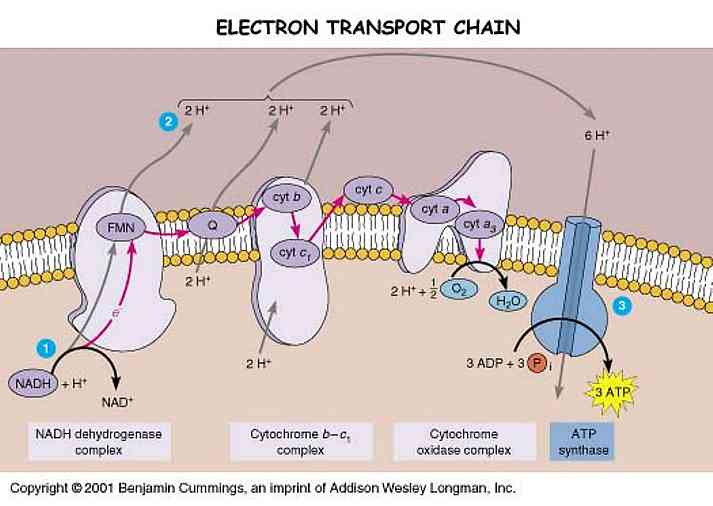
The fully reduced H2O form of oxygen is non-toxic. The various single-electron intermediates between O2 and H2O are ALL toxic free radicals, the so-called Reactive Oxygen Species (ROS). Complex IV (cytochrome oxidase complex) has a gate that transfers electrons directly to O2, reducing it to water without generating ROS. Complexes I and III, however, occasionally allow electrons to escape from the ETC to form ROS.
In Parkinson's disease, Complex I is dysfunctional, and it is thought that much higher concentrations of ROS are produced in the ETC. These attack multiple systems in the mitochondria which eventually lead to the breakdown of cellular DNA, and the cell itself.
Many cases of PD are characterized post mortem by a selective loss of dopamine cells via this mechanism.
The study by Marella et al has used the variant of Complex 1 found in yeast to attempt to quell this rampant ROS formation. Using the rotenone rat model, the group injected the Ndi1 gene via biodegradable microspheres (classy...), and monitored recovery in the substantia nigra pars compacta (SNpc; the primary region of dopamine cell loss) and in behavior.
After 60 days, tissue analysis of Ndi1-injected rotenone rats showed increased staining for viable dopamine cells in the SNpc. Those lesioned rats who did not receive the Ndi1 gene showed significantly fewer stained dopamine cells, and extensive staining with antibody against 8-oxo-dG (indicating oxidative damage to DNA).
My gripe with the study -- in addition to its not being tremendously written -- is that it is lacking in relevant behavioral assessment. The study monitored speed of movement, and the number of rotations in a widely used apomorphine test. The rotations test is normally used in unilaterally lesioned animals (which these were) to indicate preference to rotate in one direction. However, the direction of rotation induced by apomorphine in this study was determined by more factors than the unilateral lesion, which caused the animals to rotate in both directions. Therefore, behavioral data was reported as the "number of animals exhibiting 100% lateralized rotation irrespective of the direction." In my opinion, the behavioral test was severely weakened by this caveat and the group should have employed a quick additional test... like the Whisker test or lateralized grip strength.
This suggests that the Ndi1 gene -- the yeast version of Complex 1 -- was able to compensate for inhibition of Complex 1 by rotenone, decrease ROS activity by serving as an electron transporter, and lessen cell death. If this could be replicated in higher animals, it may prove a viable candidate for clinical trials.
Aside from deficits in writing and behavioral analysis, the story told by this article was fascinating with very intriguing implications. They did their homework, publishing several studies on in vitro activity of the Ndi1 gene and subsequent protein (1, 2) as well as confirming benign effects of introducing a yeast gene in vivo (1, 2) .
Marella M, Seo BB, Nakamaru-Ogiso E, Greenamyre JT, Matsuno-Yagi A, & Yagi T (2008). Protection by the NDI1 gene against neurodegeneration in a rotenone rat model of Parkinson's disease. PloS one, 3 (1) PMID: 18197244
Sunday, January 24, 2010
Journal Club: RBD and Parkinson's Disease
There is a great deal of research being done regarding the mechanisms of Parkinson's disease (PD) and possible targets for therapeutic cures. Yet, it is one of many conditions that remains incredibly hard to diagnose. PD patients are not typically diagnosed until the disease has progressed to 70-90% dopamine cell depletion when symptoms become observable in movement behaviors (Jankovic 2008).
By the time cell loss has progressed this far, it is very difficult to achieve a successful long-term treatment plan. Pharmaceuticals such as L-Dopa (Jubalt et al 2009) and rasagiline (Olanow et al 2009) are generally effective, but can lose their effect or cause dangerous side effects over time. Deep brain stimulation has been shown to be very effective behaviorally, but there it is an intense procedure which has occasionally been correlated with subsequent cognitive impairments (York et al 2008). Exercise therapies have also shown promise in recovery therapy, but have seemed more lasting in the peripheral nervous system than the dopamine system of the CNS (Goodwin et al 2009; Petzinger et al 2007; Muhlack et al 2007).
When it is so important to try to identify markers of PD before it progresses beyond our current ability to treat it in a lasting way, Dr. Ronald Postuma and colleagues out of Montreal, Quebec, Canada have identified REM sleep behavior disorder (RBD) as a possible indication of developing PD. RBD is the loss of muscle atonia that normally occurs during REM sleep, causing a person to thrash unconsciously.
Their study is a beautiful longitudinal representation of several patients diagnosed with RBD in the 1980s who developed either PD or dementia by 2004. Of their 17 final RBD patients, 6 (5m/1f) had developed PD and 11 (10m/1f) developed dementia.
The Postuma group suggests that there might be a discrete pathological condition specific to "RBD-then-neurodegeneration"which has different early manifestations than PD alone. A very interesting concept as RBD, dementia and PD are all distinctive in their Lewy body and ß-amyloid
deposition. If further study of the evolution of RBD into PD shows a strong correlation, this could be a giant leap forward in terms of PD diagnosis and early treatment. There may indeed be a distinct pathology to this progression or there may not be. In any case, this is a very important study in the field of neurodegenerative disorders, and I believe it is expecially important to get longitudinal studies like this one funded.
The staging model of PD developmnt proposed by Braak et al in 2003 proposes that the effects of PD begin in the olfactory area of the brain, spreading to autonomic and sleep-involved regions, and finally to dopamine loss in the nigrostriatal pathway and several downstream cortical pathways (Braak et al 2003). The Braak model, in conjunction with this new proposal from Postuma et al, leaves me wondering about Restless Leg Syndrome (RLS) as another possible indicator of PD.
The connection between RLS and PD is in dopaminergic transmission, as suggested by Dr. David Rye in 2004. A study by Tan et al in 2002 found that prevalence of RLS in PD patients was not significantly different from incidence in their healthy population, roughly 15%. The Tan study was not looking at progression of RLS into PD, however, so it is possible, as suggested in the Postuma study, that RLS-PD may have its own unique pathology.
To date, I have not found any longitudinal studies of RLS progressing into RBD or PD.
By the time cell loss has progressed this far, it is very difficult to achieve a successful long-term treatment plan. Pharmaceuticals such as L-Dopa (Jubalt et al 2009) and rasagiline (Olanow et al 2009) are generally effective, but can lose their effect or cause dangerous side effects over time. Deep brain stimulation has been shown to be very effective behaviorally, but there it is an intense procedure which has occasionally been correlated with subsequent cognitive impairments (York et al 2008). Exercise therapies have also shown promise in recovery therapy, but have seemed more lasting in the peripheral nervous system than the dopamine system of the CNS (Goodwin et al 2009; Petzinger et al 2007; Muhlack et al 2007).
When it is so important to try to identify markers of PD before it progresses beyond our current ability to treat it in a lasting way, Dr. Ronald Postuma and colleagues out of Montreal, Quebec, Canada have identified REM sleep behavior disorder (RBD) as a possible indication of developing PD. RBD is the loss of muscle atonia that normally occurs during REM sleep, causing a person to thrash unconsciously.
Their study is a beautiful longitudinal representation of several patients diagnosed with RBD in the 1980s who developed either PD or dementia by 2004. Of their 17 final RBD patients, 6 (5m/1f) had developed PD and 11 (10m/1f) developed dementia.
The Postuma group suggests that there might be a discrete pathological condition specific to "RBD-then-neurodegeneration"which has different early manifestations than PD alone. A very interesting concept as RBD, dementia and PD are all distinctive in their Lewy body and ß-amyloid
deposition. If further study of the evolution of RBD into PD shows a strong correlation, this could be a giant leap forward in terms of PD diagnosis and early treatment. There may indeed be a distinct pathology to this progression or there may not be. In any case, this is a very important study in the field of neurodegenerative disorders, and I believe it is expecially important to get longitudinal studies like this one funded.
The staging model of PD developmnt proposed by Braak et al in 2003 proposes that the effects of PD begin in the olfactory area of the brain, spreading to autonomic and sleep-involved regions, and finally to dopamine loss in the nigrostriatal pathway and several downstream cortical pathways (Braak et al 2003). The Braak model, in conjunction with this new proposal from Postuma et al, leaves me wondering about Restless Leg Syndrome (RLS) as another possible indicator of PD.
The connection between RLS and PD is in dopaminergic transmission, as suggested by Dr. David Rye in 2004. A study by Tan et al in 2002 found that prevalence of RLS in PD patients was not significantly different from incidence in their healthy population, roughly 15%. The Tan study was not looking at progression of RLS into PD, however, so it is possible, as suggested in the Postuma study, that RLS-PD may have its own unique pathology.
To date, I have not found any longitudinal studies of RLS progressing into RBD or PD.
Subscribe to:
Posts (Atom)